By London Street Signs · The Marketing Edge
Your shopfront is the hardest-working member of your marketing team. It works every hour your doors are open — and every hour they’re closed — speaking to hundreds of potential customers who walk or drive past each day. Unlike a social media post that disappears in a day, your storefront keeps selling around the clock, and it costs you nothing extra per impression.
Yet most business owners treat their shopfront as decoration rather than strategy. Here are seven practical tactics that turn a passive storefront into an active selling tool.
1. Treat Your Window Display as an Advert, Not Decoration
Your window is the first thing a potential customer sees, and it decides in seconds whether they keep walking or step inside. The most effective window displays do what good adverts do: they have one clear message.
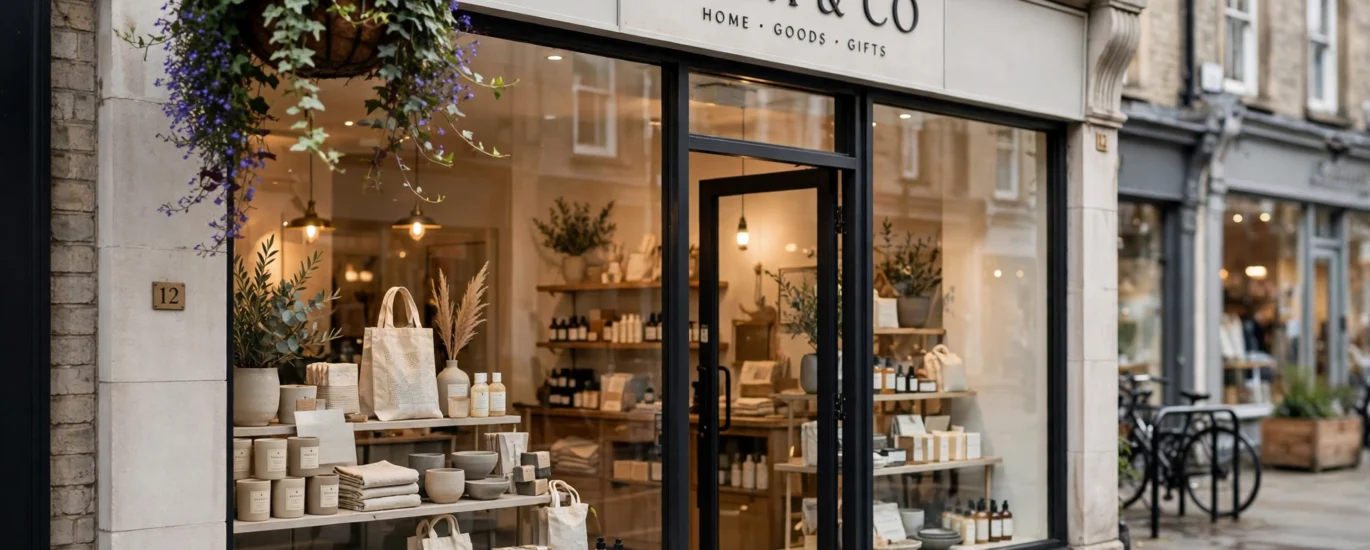
Pick a single theme or hero product rather than cramming in everything you sell. Group products into a bold, simple arrangement with plenty of empty space around them — visual breathing room makes the important items stand out and signals quality. Retailers who refresh their windows regularly, at least with the changing seasons, give passersby a reason to look twice and regulars a reason to believe something new is always happening inside.
Walk across the street and look at your own window. If you can’t tell what the shop sells within three seconds, neither can your customers.
2. Light It Like It Matters — Because It Does
Lighting is one of the most underused marketing tools on the high street. A well-lit shopfront looks open, safe and inviting; a dark one looks closed even when it isn’t.
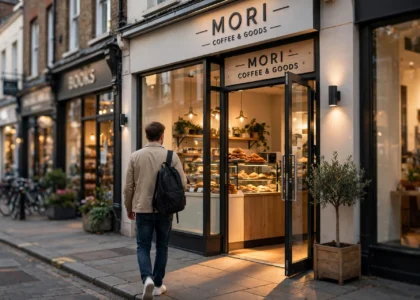
This matters most in the darker months, when many customers pass your shop in the evening. Keep your window display lit after hours so your products keep working for you overnight. Inside, use focused lighting to draw the eye to featured products rather than flooding everything with the same flat brightness — a spotlight on a hero product creates drama and desire that uniform lighting never will.
Check your lights regularly. A flickering or dead bulb sends exactly the wrong message about how you run your business.
3. Make Your Signage Earn Its Place
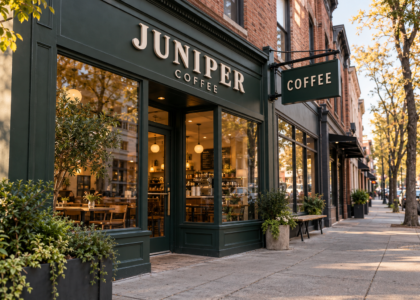
Your main sign is often the first thing people notice about your business, so it has to do three jobs at once: be visible, be readable, and reflect your brand. That means letters large enough to read from across the street, strong contrast between text and background, and a clean, uncluttered design — usually just your business name, logo, and perhaps a short descriptor of what you do.
Keep it consistent with everything else customers see, from your carrier bags to your Instagram profile. Consistency builds familiarity, and familiarity builds trust. And keep it maintained: faded, peeling or damaged signage quietly tells customers that standards have slipped everywhere else too.
Signage is one instrument in the orchestra, not the whole band — but when it’s off-key, the entire performance suffers.
4. Cleanliness Is a Marketing Message
Customers judge your business by what they can see before they ever meet you. Dirty windows, a littered doorway, peeling paint or a grimy entrance mat all whisper the same thing: if they don’t care about their own front door, how much will they care about me?
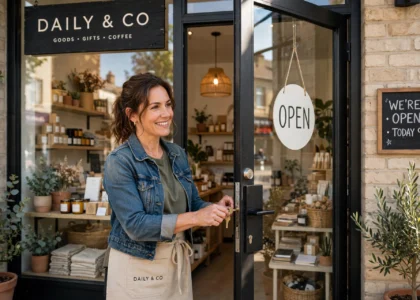
This is the cheapest marketing upgrade available. Wash the windows inside and out, sweep the entrance daily, touch up scuffed paint, and keep the doorway clear and welcoming. On pleasant days, propping the door open creates an atmosphere of openness that a closed door never can — it removes the psychological barrier of having to commit to entering.
First impressions are formed in seconds and are stubborn to change. Make yours count.
5. Display Your Opening Hours Clearly
It sounds almost too basic to mention, yet unclear opening hours cost businesses customers every single day. A passerby who can’t tell whether you’re open will simply keep walking rather than risk an awkward locked-door moment.
Put your hours where they can be read from the pavement — on the door or window, in large, clear lettering. Keep them accurate, especially around holidays and seasonal changes, and make sure what’s displayed matches what’s actually happening inside. Nothing frustrates a customer more than arriving during posted hours to find the shutters down.
While you’re at it, a simple welcome message on the door costs nothing and softens the threshold between pavement and shop floor.
6. Put an A-Board to Work on the Pavement
An A-board — the classic sandwich board on the pavement — is one of the few marketing tools that physically intercepts people. While most shoppers walk with their eyes on their phones, a well-placed board at foot level is genuinely hard to ignore.
Use it for what changes daily: today’s special offer, a new arrival, a witty line that makes people smile, or a simple arrow pointing to your door if you’re tucked slightly off the main flow. Chalkboard-style boards work brilliantly because they signal freshness — customers assume the message was written this morning, which it was.
Keep the message short enough to read while walking, and always check local pavement-sign rules in your area so your board stays where you put it.
7. Update With the Seasons — Stay Alive in Customers’ Eyes
A shopfront that never changes becomes invisible. Regulars stop noticing it, and passersby file it under “seen it before.” Seasonal updates are the antidote.
You don’t need a big budget — even small touches signal that your business is active and attentive. A spring refresh, a summer theme, an autumn display, festive touches in winter: each change gives existing customers a reason to look again and new customers a reason to look for the first time. Tie displays to local events, holidays and the products you most want to move.
The deeper principle is simple: a shopfront that visibly evolves tells the street that the business behind it is alive, growing and worth visiting.
Your shopfront is speaking to potential customers right now, whether you’ve planned the message or not. These seven tactics don’t require a big budget — they require attention. Start with the one your shop needs most, and you’ll be surprised how quickly the street starts responding.
London Street Signs are marketing experts helping business owners win customers — through smarter branding, shopfront strategy and local marketing that actually works.