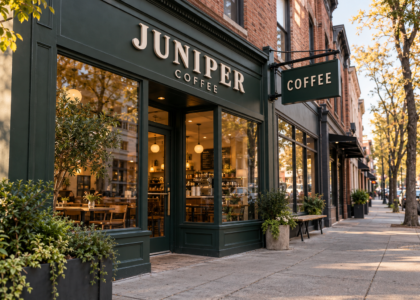

A potential customer walks past your shop. They glance at your storefront, your window, your entrance — and in a matter of seconds, they’ve already decided something about you. Not about your prices or your product range. About whether they trust you, whether you’re worth their time, and whether they’ll walk in or keep walking.
Research on first impressions suggests these judgments happen in seconds, not minutes. Psychologists call it “thin-slicing” — the brain’s ability to make rapid assessments from tiny fragments of information. And once that snap judgment is locked in, everything the customer experiences afterwards gets filtered through it.
This is both the danger and the opportunity of running a physical business. Let’s break down what customers actually notice in those first seconds, the psychology driving their judgment, and what you can fix this week.
What Customers Actually See First
Forget what you think your business looks like. Your customers don’t start with your product catalogue or your “About Us” story. They start with a quick visual sweep, usually in this order:
1. The exterior and entrance. Is the front clean or cluttered? Does it look open and inviting, or closed off and tired? A scuffed door, peeling paint, or a dusty window display sends a message before you’ve said a word.
2. Lighting. Warm, well-lit spaces feel safe and premium. Dim, flickering, or harsh lighting triggers unease — even if customers can’t explain why. Your lighting is working for or against you every single evening.
3. Signage and name. Can a passer-by read your name from across the street? Does it look deliberate and professional, or like an afterthought? Your sign is often the very first branded thing a customer registers.
4. The greeting (or lack of one). Within seconds of entering, a customer registers whether staff noticed them, smiled, or seemed annoyed. No greeting reads as “we don’t want your business.”
5. Smell and sound. A salon that smells of chemicals, a café that smells of stale milk, a shop with no background music at all — these register instantly and unconsciously.
6. Clutter vs. calm. A tidy, organised space signals competence. Piles of boxes, tangled cables, or a chaotic counter signal the opposite — even if your actual service is excellent.
None of these require a marketing budget to notice. They require fresh eyes.
The Halo Effect: Why One Detail Colours Everything
Here’s the psychology that makes first impressions so powerful. In 1920, psychologist Edward Thorndike described what he called the halo effect: when we notice one positive trait, we unconsciously assume other positive traits follow. One negative trait works the same way in reverse.
In plain terms: a customer who sees a crisp, well-kept storefront doesn’t just think “nice shopfront.” Their brain quietly upgrades everything else — “the products must be good, the staff must be professional, the prices are probably fair.” And a customer who sees a neglected entrance does the opposite — they downgrade your quality, your service, and your trustworthiness before they’ve experienced any of it.
This isn’t customers being shallow. It’s how human brains economise. We can’t deeply evaluate every business we pass, so we use visible cues as shortcuts. The practical takeaway: you don’t need to be perfect everywhere — you need to be excellent at the handful of things customers see first. Get the entrance right and the halo effect does the rest of the selling for you.
The Fixes You Can Make This Week
You don’t need a rebrand or a renovation. Most first-impression problems are small, cheap, and fixable in days. Here’s where to start:
Audit your entrance like a stranger. Stand across the street and look at your business the way a first-time customer would. Better yet, ask a friend who’s never visited to do it and tell you honestly what they notice. You’ll be amazed at what you’ve stopped seeing.
Clean what customers touch and see. The door handle, the window glass, the step, the sign. Grime in these spots is invisible to you and glaring to a newcomer.
Fix your lighting. Replace dead bulbs, warm up cold fluorescents, and make sure your interior is visible from outside after dark. A dark shopfront at 7pm might as well have a “closed” sign on it.
Make your name readable. If a customer can’t read your business name from 20 metres away, you’re invisible to foot traffic. Clarity beats cleverness — always.
Script the first 10 seconds inside. Train every team member on one simple behaviour: acknowledge every person who walks in within seconds. A smile and “hello, welcome in” costs nothing and changes everything.
Remove one source of clutter. Pick the single messiest visible spot — the counter, the window, the pavement outside — and clear it completely. One calm zone changes the feel of the whole space.
Check the smell. Walk in after being away for an hour and notice what hits you. Then fix it — ventilation, cleaning products, air fresheners, whatever it takes.
Your 7-Second Checklist
Run through this list this week. Tick off every item, and your first impression is working for you instead of against you:
- Storefront and entrance clean, no litter, peeling paint, or damage
- Business name clearly readable from across the street
- Window display tidy, current, and dust-free
- Lighting warm and working — interior visible after dark
- Door opens easily; handle and glass spotless
- Every customer greeted within 10 seconds of entering
- No visible clutter on counters, floors, or pavement
- Pleasant smell on entry — no staleness or harsh chemicals
- Staff appearance neat and consistent
- One “hero detail” that makes you memorable (a striking display, a signature scent, a standout sign)
The Bottom Line
Customers aren’t judging your business unfairly — they’re judging it the only way human brains know how: fast, visual, and emotional. The businesses that win aren’t necessarily the best at what they do. They’re the best at making those first seven seconds count.
The good news? This is one of the few areas of marketing where small, cheap changes produce outsized results. A clean entrance, clear name, warm light, and a genuine greeting can shift a customer’s entire perception before they’ve spent a penny. That’s not decoration — that’s strategy.
London Street Signs are marketing experts helping business owners win customers through smarter branding, shopfront strategy, and local marketing.